Multi-generational living has become increasingly common in Western North Carolina, and Asheville in particular has seen more families choosing to bring parents or grandparents into the household rather than pursue other care arrangements. Sometimes it’s a parent moving into an in-law suite. Sometimes it’s an adult child returning home with their own family in tow. Occasionally it’s three generations sharing a single home that wasn’t originally designed with that in mind.
Whatever the specific arrangement, the question of who has access to what, and how that access is managed day to day, comes up quickly and doesn’t always have an obvious answer.
The Complexity Is Real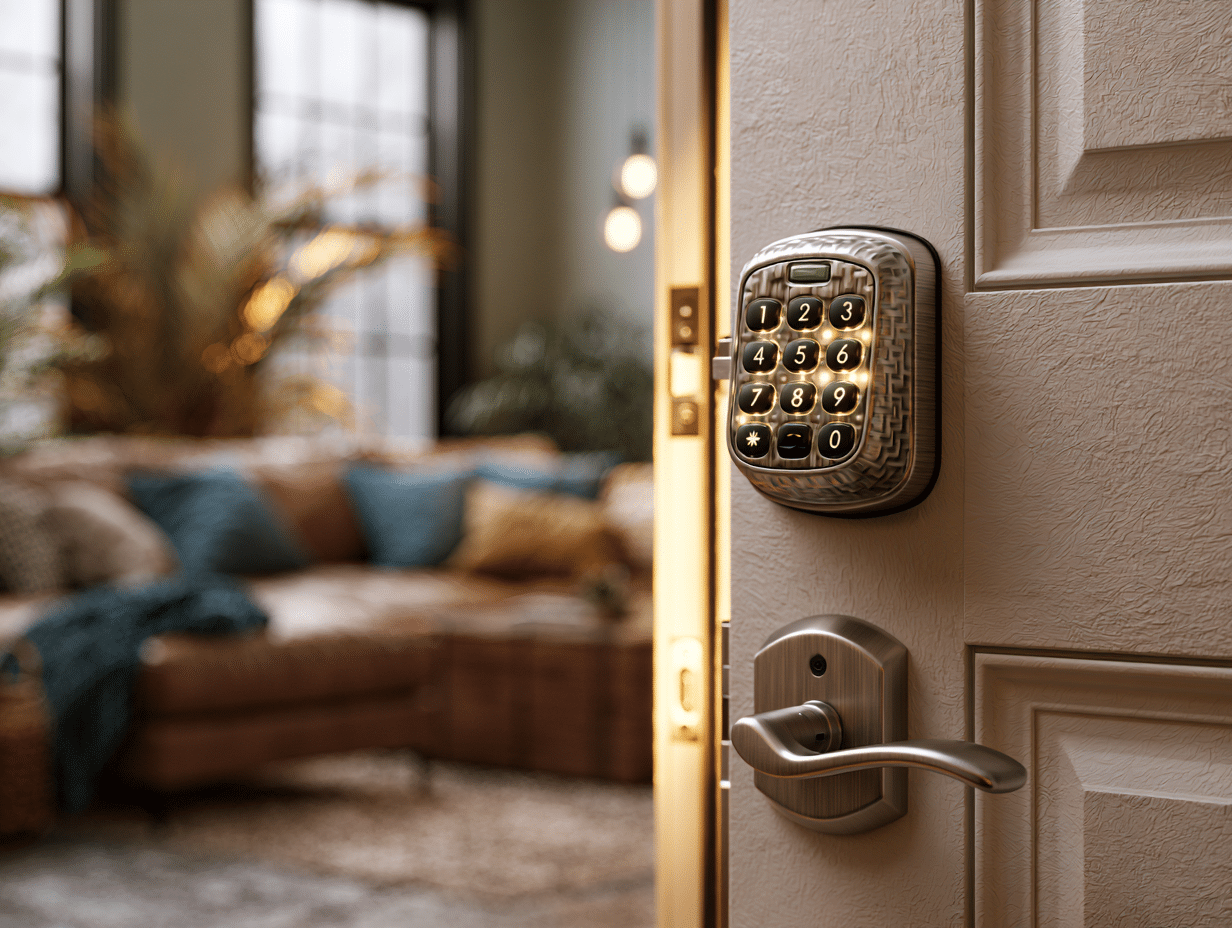
In a single household with one or two adults on the same schedule, managing keys and lock access is simple. There’s a front door key, maybe a back door key, and everyone knows where they go.
When you add more adults with different schedules, different levels of mobility, different degrees of independence, and potentially different units within the same property, the logistics get complicated fast.
An aging parent with arthritis may struggle with standard key operation. A teenager who leaves for school at 6 AM needs reliable independent access. A grandparent who sometimes forgets whether they locked the door needs a way to check without having to walk back downstairs. A caregiver who visits during weekday hours needs access during specific windows, but not necessarily unlimited access at all hours.
Each of those is a real situation, and none of them is well served by a single traditional keyed deadbolt.
Starting with Keypad Locks
A keypad deadbolt is often the first upgrade that makes sense for multi-generational households. Instead of distributing physical keys, each person who needs access gets a code. Codes can be different for each person, which allows you to track who is coming and going if the lock logs entries. Codes can also be changed easily, which matters when a caregiver relationship ends or when someone’s schedule changes.
For an elderly parent who sometimes loses things, not needing to keep track of a physical key is genuinely meaningful. There’s no key to misplace, nothing to leave inside when stepping out to get the mail, and no need to call someone for help if they get locked out.
For a teenager or young adult, a code feels more natural than a physical key and is easier to program around specific times if you want to set access windows.
Separate Suites and Separate Access Points
Many multi-generational setups involve a separate suite with its own exterior entrance, whether that’s a basement apartment, an attached addition, or a converted garage. When there are truly separate living spaces, separate lock systems for each unit make sense.
The suite should have its own keyed entry that the occupant controls, distinct from the main household entry. This creates appropriate privacy and independence while still allowing for coordinated access when needed. A parent in a downstairs suite shouldn’t need to use the same front door as the main household, and they should have their own entry that they can control.
If connectivity between the suite and the main living area is important, an interior connecting door with its own lock allows family members to move between spaces when appropriate while maintaining separation when that’s preferred.
Smart Lock Features That Help Multi-Generational Families
Wi-Fi enabled locks add capabilities that are particularly useful when different generations are involved. The ability to check lock status remotely means an adult child can verify from their phone that an elderly parent’s door is locked, without having to make a physical trip or a phone call that might feel intrusive.
Remote locking and unlocking means a family member who’s away can let in a caregiver or delivery person without needing to be home. Access logs let everyone see when entries and exits happened, which is useful both for peace of mind and for understanding a family member’s patterns if there’s any concern about their wellbeing.
Temporary access codes for caregivers, housecleaners, or other recurring visitors can be created and deleted as needed without affecting anyone else’s access.
Physical Considerations for Older Adults
Arthritis, reduced grip strength, and other physical changes that come with aging affect how well a person can operate standard lock hardware. A deadbolt that requires a key to be inserted and turned may be genuinely difficult for someone with significant arthritis in their hands.
Keypad locks eliminate the key operation entirely, which helps. Lever handles instead of round knobs require less gripping force and are easier to operate for most people with hand mobility issues. Door closers that are tensioned too tightly make doors harder to push open and are worth adjusting in spaces used by elderly family members.
Lock placement matters too. A deadbolt positioned at an awkward height for a shorter person, or one mounted unusually high on an older door, may be difficult to reach and operate comfortably. These are details worth looking at when setting up a home for multi-generational use.
Emergency Access
When an older or medically vulnerable family member is living in your home, emergency access is worth planning for explicitly. If something happens and a family member needs to get to them quickly, being able to get through the door matters.
For a door with a thumb turn on the interior, a locksmith can evaluate whether the hardware allows for outside access in an emergency. For a room with a keyed lock, keeping a spare key in an accessible but secure location, rather than needing to call someone to bring one, is practical planning.
Some families who house an elderly parent with health concerns keep a simple key lockbox with a code in a known location that a paramedic or emergency responder could access. This is a thoughtful precaution that doesn’t compromise day-to-day security.
When the Living Situation Changes
Multi-generational arrangements change over time. A parent who moved in with their own full independence may eventually need more support. An adult child who returned home may move out. A caregiver who had access for months may no longer need it.
Any of these transitions is a natural time to revisit the access situation. Rekeying a door when a caregiver relationship ends is a small thing that provides real assurance. Changing codes when household membership changes is similarly simple with a keypad system.
The advantage of most electronic access systems is that these transitions don’t require a locksmith visit. You can update codes yourself. Physical key systems, though, do require rekeying when you want certainty that a particular key no longer works.
Getting the Right Setup for Your Family
There’s no single right answer for multi-generational lock access because the specifics depend so much on the family, the home’s layout, and the mobility and independence needs of each person involved. What we can do is help you think through your specific situation and recommend hardware that actually fits what you’re dealing with.
Gene and the team at A.L. Odom Locksmiths work with Asheville families on exactly this kind of setup regularly. We’re not going to push a product category that doesn’t fit your situation. We’ll ask about who needs access, how the home is laid out, what the mobility needs are, and what your budget looks like, and we’ll give you an honest recommendation.
Find us at 1240 Brevard Rd, Suite 4, Asheville, NC 28806. We serve families throughout Asheville, Hendersonville, Weaverville, Black Mountain, Burnsville, Waynesville, Swannanoa, Fletcher, Arden, and the broader Western North Carolina area. Call us at (828) 274-6613.