
There’s a particular kind of frustration that comes from sitting in your car, inserting your key in the ignition, and having absolutely nothing happen. The key goes in, it turns, and the car just doesn’t start. No crank, no click, sometimes just a security light sitting on the dashboard looking back at you.
The key works mechanically. It fits in the ignition. It turns the cylinder. But the car won’t start.
If this has happened to you, you’re probably dealing with a transponder issue rather than a mechanical key problem. Here’s what that means and what to do about it.
What a Transponder Key Is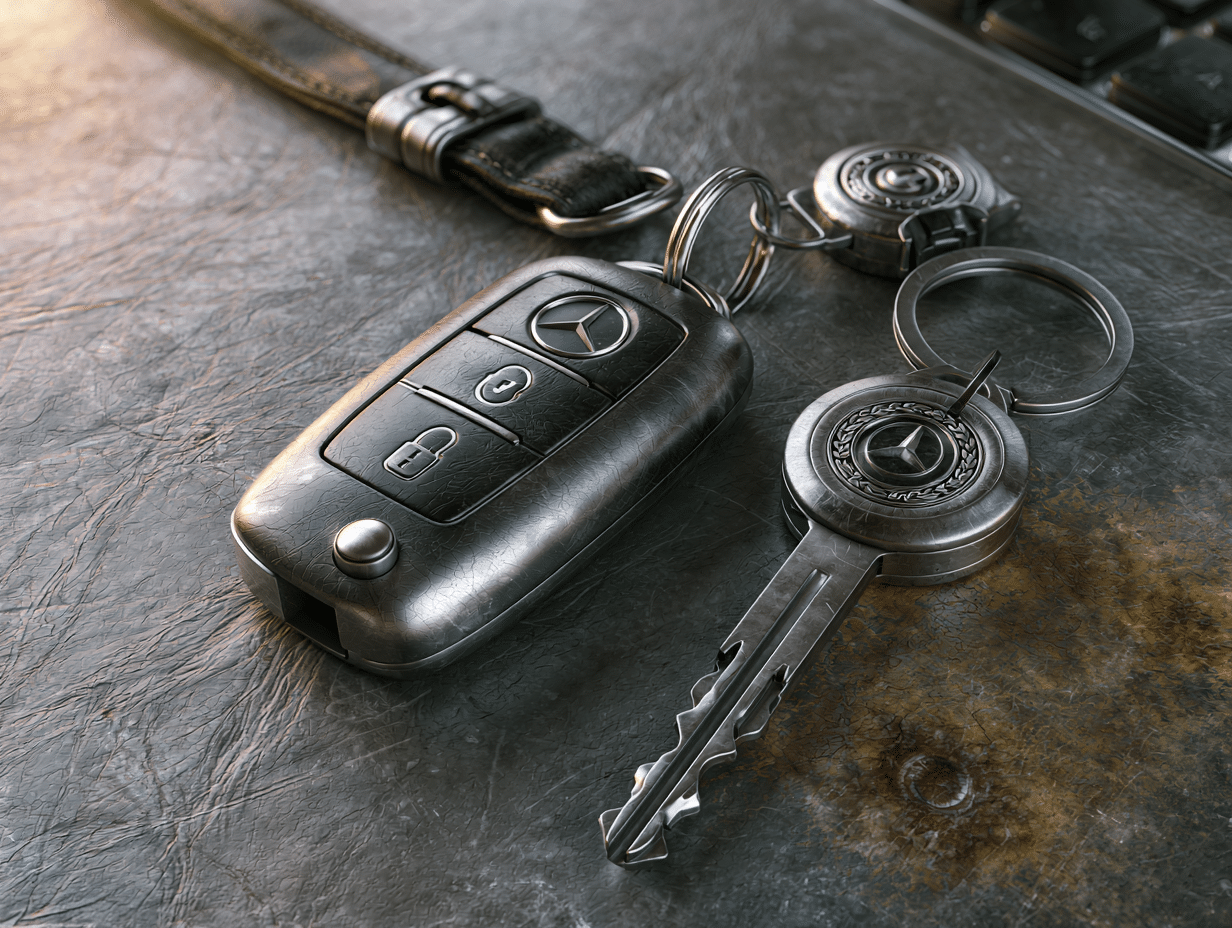
Since the mid-1990s, most car manufacturers have built an electronic component into their ignition keys. Inside the plastic head of a modern car key, there’s a small chip, the transponder, that communicates with a receiver in the car’s ignition. When you insert the key and turn it, the vehicle sends a radio signal to the chip, the chip responds with a code, and the car’s immobilizer system compares that code to what it has stored. If the codes match, the immobilizer allows the engine to start.
If the chip doesn’t respond, or if the code doesn’t match, the immobilizer prevents the engine from starting even though the key turns the cylinder correctly. This is the entire point of the system. It means a mechanically copied key, one that physically fits but doesn’t have the correct electronic credentials, won’t start the car.
The trade-off is that the electronics in your key can fail or lose their programming, and when that happens, you’re left with a key that works mechanically but does nothing electronically.
Common Reasons a Transponder Key Stops Working
The chip in a transponder key is generally durable, but a few things cause it to fail or lose programming.
Physical damage to the key head is the most common. If the plastic portion of your key has cracked, been bent, or taken a hard impact, the chip inside may have broken or shifted out of position. A chip that’s physically cracked can still appear to be in one piece from the outside, so damage isn’t always visible.
Water damage is another common cause. Keys that have been through the washing machine, dropped in a body of water, or repeatedly exposed to heavy rain eventually suffer from moisture getting to the chip. The electronics inside are small and not waterproof.
Battery issues in key fobs are often confused with transponder failures. Remote functions like lock, unlock, and trunk release run off a battery. The transponder chip that communicates with the immobilizer is typically passive, meaning it draws power from the signal the car sends rather than from the key’s battery. If your remote buttons have stopped working but the car still starts, that’s a battery issue. If the car won’t start at all, it’s more likely the chip.
Demagnetization from exposure to strong magnetic fields, while less common, can affect chip function. Keeping your key on a ring with a strong magnetic clasp, or in proximity to strong magnets, is worth avoiding.
Loss of synchronization between the key and the car’s immobilizer system can also occur, particularly after certain types of battery work on the vehicle or after the car’s ECU is replaced or reprogrammed. In these cases, the chip itself is fine but the car no longer recognizes it.
How to Tell If It’s the Transponder
A few simple tests can help narrow this down.
If your car has a spare key that you know worked the last time you used it, try starting the car with that key. If the spare works and the primary key doesn’t, the primary key’s chip has a problem. If neither key works, the issue may be on the vehicle side, the immobilizer reader, a fuse, or a module.
Check whether a security indicator light or immobilizer warning light appears on the dashboard when you attempt to start the car with the non-working key. Many vehicles illuminate a small lock or car icon when the immobilizer doesn’t recognize the key. If that light appears, it confirms the system is detecting an authentication failure.
If the car cranks (you hear the engine trying to turn over) but won’t fully start, that sometimes points to a fuel system or ignition issue rather than a transponder problem. A transponder failure usually results in no crank or a brief attempt that shuts down immediately.
What Fixes a Transponder Problem
If the chip itself is physically damaged, a new key needs to be cut and programmed. This is the most common scenario. A new key blank with the correct chip for your vehicle’s make, model, and year gets cut to match your ignition and then programmed to your car’s immobilizer.
If the chip has simply lost synchronization with the vehicle, some makes and models allow for reprogramming without replacing the key. The key’s chip gets re-introduced to the car’s system through a programming sequence. In other cases, the car needs a scan tool to clear the old programming and accept the new credentials.
This is exactly the type of work we handle at our Asheville shop and on-site throughout Western North Carolina. Transponder programming requires both the right equipment for your vehicle’s communication protocol and the right key blank for the specific chip type your car uses. This is why the dealer typically charges significantly more for key programming than an independent automotive locksmith. We have the same programming capability for most makes and models at a substantially lower price.
Why Going to a Dealer Isn’t Your Only Option
Dealerships have the equipment to program transponder keys for their own brand’s vehicles. What they also have is service department overhead, hourly rates, and sometimes a wait time measured in days rather than hours.
An automotive locksmith with proper programming equipment can handle the same work for many popular makes and models, often at your location, and typically at a noticeably lower cost. For most common vehicles driven in and around Asheville, we can cut and program a replacement transponder key the same day.
The vehicles where a dealer is genuinely the more practical option tend to be very new models with proprietary programming systems not yet supported by aftermarket tools, or certain luxury brands with tightly controlled programming access. For everything else, calling a locksmith first is usually faster and less expensive.
If You’re Stuck Right Now
If your vehicle won’t start and you’re away from home, call us. We provide automotive locksmith service throughout the Asheville area and surrounding Western North Carolina communities. If it’s a transponder issue, we can often get you back on the road the same day with a properly programmed replacement key.
A.L. Odom Locksmiths is at 1240 Brevard Rd, Suite 4, Asheville, NC 28806. We serve Asheville, Hendersonville, Weaverville, Black Mountain, Swannanoa, Burnsville, Waynesville, Fletcher, Arden, Marshall, Spruce Pine, and surrounding communities. Call us at (828) 274-6613.